

Witamy w kościele św. Bernadety
Learn to love, love to learn

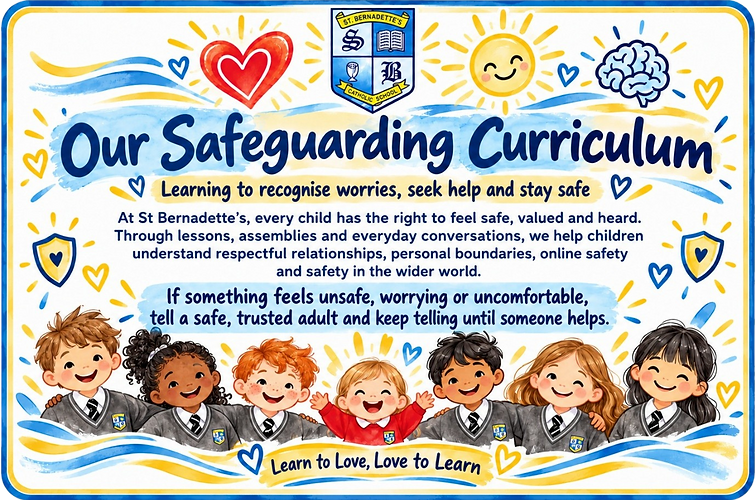
At St Bernadette’s, every child has the right to feel safe, valued and heard. Our safeguarding curriculum helps children recognise worries, understand respectful relationships and personal boundaries, make safer choices and know where to turn for help, both in person and online. Rooted in our Catholic faith and our motto, Learn to Love, Love to Learn, we teach children to recognise the dignity of every person, show kindness and respect, and care for one another. Children learn that their voices matter and that adults have a responsibility to help keep them safe. Our central message is: If something feels unsafe, worrying or uncomfortable, tell a safe, trusted adult and keep telling until someone helps. Children are reminded that abuse or harm is never their fault. They do not need to manage a worry alone At St Bernadette’s, every child has the right to feel safe, valued and heard. Our safeguarding curriculum helps children recognise worries, understand respectful relationships and personal boundaries, make safer choices and know where to turn for help, both in person and online. Rooted in our Catholic faith and our motto, Learn to Love, Love to Learn, we teach children to recognise the dignity of every person, show kindness and respect, and care for one another. Children learn that their voices matter and that adults have a responsibility to help keep them safe. Our central message is: If something feels unsafe, worrying or uncomfortable, tell a safe, trusted adult and keep telling until someone helps. Children are reminded that abuse or harm is never their fault. They do not need to manage a worry alone
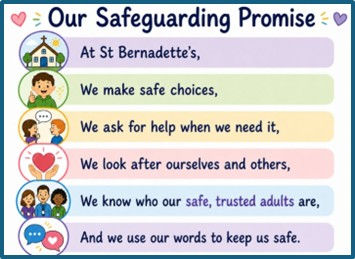
How we teach safeguarding Our planned assembly programme reinforces learning through PSHE, Relationships and Health Education, Computing, wellbeing activities and everyday conversations. Assemblies revisit important messages; they do not replace the detailed teaching children need in lessons. Stories, discussion and practical examples help children apply learning to familiar situations. Teaching is adapted to children’s age, development and needs. We return to important ideas over time, helping children remember key messages and develop confidence in asking for help. Learning also connects with British Values and Catholic Social Teaching through fairness, dignity, respect and care for our community.
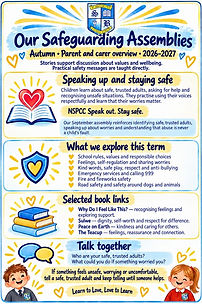
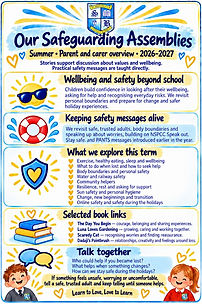
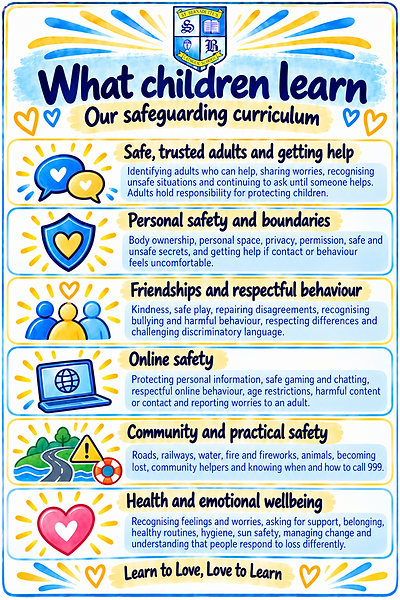
What Children Learn
Families play an important part in reinforcing these messages. You can ask your child who their safe, trusted adults are, remind them that they can talk about anything that worries them, discuss online experiences and practise everyday safety together.
If your child shares a worry, listen calmly, reassure them that telling you was the right thing to do and contact school if support is needed. Speak to your child’s class teacher for curriculum questions. For a safeguarding concern, please see our main Safeguarding page
Learning across the year
Inclusion & Pupil Voice
Every child should be able to access safeguarding learning and communicate a concern. Adults adapt language, use visual support and modelling, revisit messages and provide additional teaching where needed. Children can ask for help in different ways; confidence with spoken language is not a condition for being heard. Children’s questions and experiences help us identify messages that need revisiting. We listen sensitively, without asking children to share personal experiences publicly, and respond to concerns through our safeguarding procedures
Working with parents & carers
Families play an important part in reinforcing these messages. You can ask your child who their safe, trusted adults are, remind them that they can talk about anything that worries them, discuss online experiences and practise everyday safety together. If your child shares a worry, listen calmly, reassure them that telling you was the right thing to do and contact school if support is needed. Speak to your child’s class teacher for curriculum questions. For a safeguarding concern, please see our main Safeguarding page